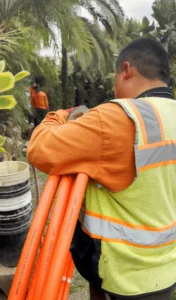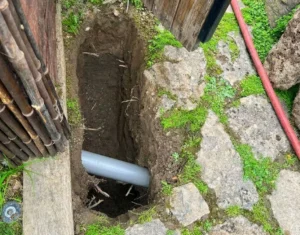
A homeowner who encounters a failed underground water or sewer line at a single-family residence quickly learns that digging, downtime and unbudgeted costs lie ahead. At an apartment complex, condo community or HOA, the scope grows — impacting residents, shared walkways, landscaping, parking areas and daily operations.
When sewer or water line problems persist, isolated repairs can fall short. Property managers benefit from a clear view of the full system and a plan that addresses the root cause. TrenchFree provides full-property utility replacement for HOAs and managed communities that need a long-term solution with minimal surface disruption.
Multi-family properties need a different approach
At a multi-family property, underground lines run beneath common areas, landscaped slopes, sidewalks, driveways and access routes that residents use daily. A conventional excavation frequently cuts through those spaces, requiring extensive digging and restoration where residents need that need to remain safe and accessible.
Excavation is a lengthier process than trenchless solutions and disruption extends beyond the repair area. Property managers often need to coordinate resident notices, contractor access, inspections and temporary restrictions while fielding questions from residents, ownership groups or HOA boards.
A trenchless approach reduces the scope of the digging. The goal is to complete the work with a more targeted plan that protects portions of the property that do not need to be disturbed.
Start with a property-wide assessment
Before choosing a repair method, the first step is to assess the condition of the underground pipe system.
A Property Infrastructure Assessment can help HOA boards and property managers identify areas of concern, review options and prepare for budget discussions. This is especially relevant when a property experiences recurring leaks, backups or repeat repairs in different areas.
An plumbing assessment also helps separate isolated problems from wider infrastructure issues. A single repair may be appropriate when damage is localized. When failures extend across several buildings or areas of a property, a broader renovation may make sense.
Where trenchless methods may help
The right method depends on the utility line, pipe condition, access points and property layout.
For aging sanitary lines, trenchless sewer services may include targeted repairs, pipe lining or pipe bursting. For failing water lines, trenchless water main services can help reduce the need for long open trenches across lanscaping, walkways or paved areas.
Before recommending a sewer repair method, a sewer camera inspection can provide a clearer view of cracks, root intrusion, corrosion, joint separation or previous repair failures. This imaging helps define whether the line can be rehabilitated, or if it needs replacement.
Trenchless methods are not a one-size-fits-all solution. Some pipe conditions or site constraints may still require excavation. The assessment’s purpose is to choose the least disruptive method to address the underground issue.
Protecting shared spaces during utility work
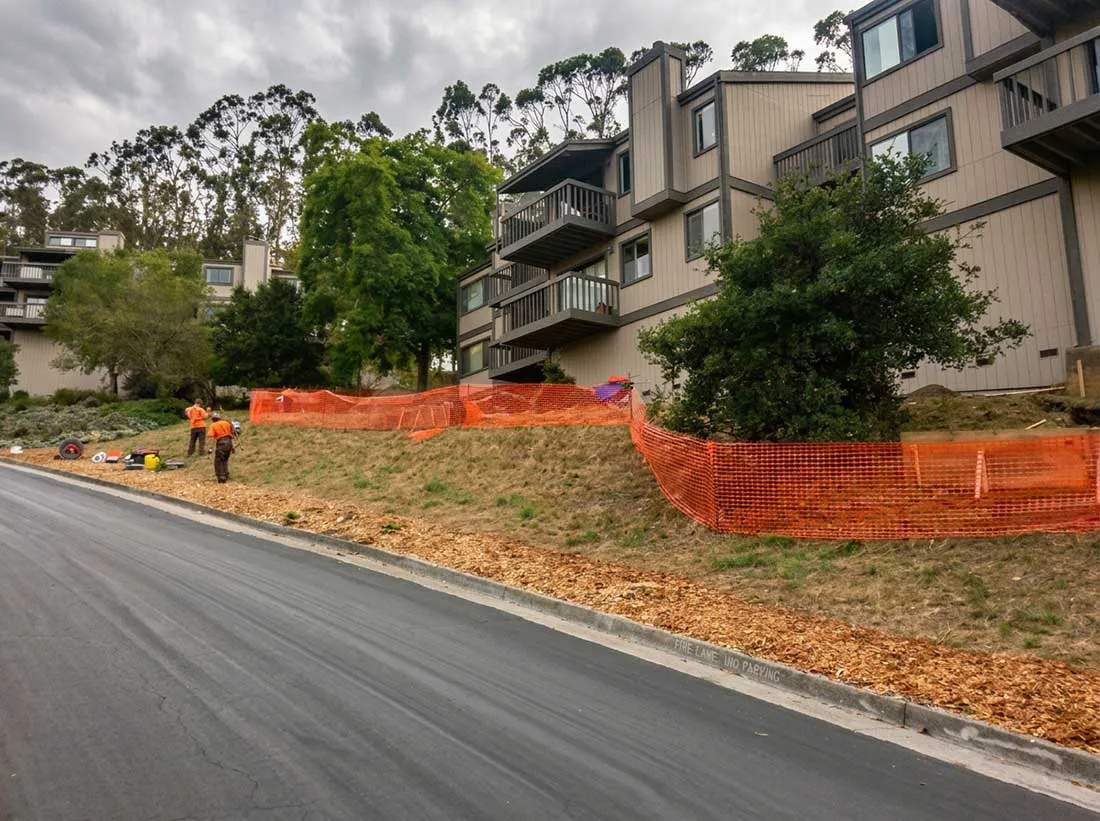
At an occupied property, residents need uninterrupted access to buildings, parking and shared walkways, and managers should, when possible, protect landscaping, pavement and common areas that are costly to restore after extensive digging.
Trenchless work shrinks the footprint by using planned access points instead of excavating the entire pipe path, keeping more of the property accessible while crews work and inspections await.
A workable plan accounts for the property layout, resident movement and areas that need extra safety considerations. Fencing, notices and clearly marked work zones reduce confusion while crews finish the job.
Phased planning can make a difference
Large utility upgrades needn’t happen all at once. A phased plan lets management tackle highest-risk sections first, schedule work around residents and ease the budget impact. The sequence depends on the system’s condition and how the lines serve each building.
Communication is part of the plan. Residents should know which areas will be affected, when access changes and how long restrictions last. An organized approach reduces chaos and gives managers a clear methodology to report progress.
TrenchFree documented this approach in its 70-unit sewer and water modernization case study, which required careful coordination at an occupied community.
Consider the full project structure
Contractor structure matters too. When multiple contractors handle the work, communication and scheduling get more complicated. Managers may have to coordinate through a general contractor while the specialist doing the underground work sits further down the chain.
Working directly with the specialist provides clearer accountability. TrenchFree breaks down this approach in its guide to working direct-to-source for HOA and property management projects.
For a multi-family property, that clarity helps boards and management teams understand the scope, compare options and make decisions based on the full project impact rather than just the initial construction line item.
Plan before repeated repairs become emergencies
Recurring utility problems often signal that a property needs a broader review. A temporary repair may solve the immediate issue, but repeated leaks, backups or failures across several areas grow expensive and hard to manage over time. Planning ahead gives managers more control over the timeline and reduces the risk of major decisions made during an emergency.
For HOA boards, apartment communities and property management teams, the starting point is a clear assessment of the underground system and the available options.
To discuss an upcoming project or schedule an evaluation, contact TrenchFree.
Frequently Asked Questions
Can every utility replacement project be completed using trenchless methods?
No. The best approach depends on a property’s pipe condition, access points, soil conditions and layout. An assessment is needed before selecting a repair or replacement method.
Can trenchless work reduce disruption for residents?
Trenchless methods can reduce the amount of excavation required across shared areas. This may help preserve access, limit surface restoration and make the project easier to coordinate around an occupied community.
What underground systems should a multi-family property assess?
The scope depends on the property, but sewer, water and gas lines may all need review when systems are aging or experiencing repeated problems.
Is a property-wide assessment only necessary after a major failure?
No. An assessment can also help HOA boards and property managers plan ahead, prepare budgets and prioritize future upgrades before isolated problems develop into larger emergencies.
Can utility upgrades be completed in phases?
In some cases, yes. The property layout, system condition and project priorities determine whether a phased plan is appropriate.