
Repair leaks, cracks or a failing water main while preserving your lawns, gardens and hardscape. No need for open trenching or a torn-up yard or driveway. TrenchFree installs, repairs and replaces water utility lines using trenchless methods to minimize surface disruption.
Call for a free consultation, or a camera inspection
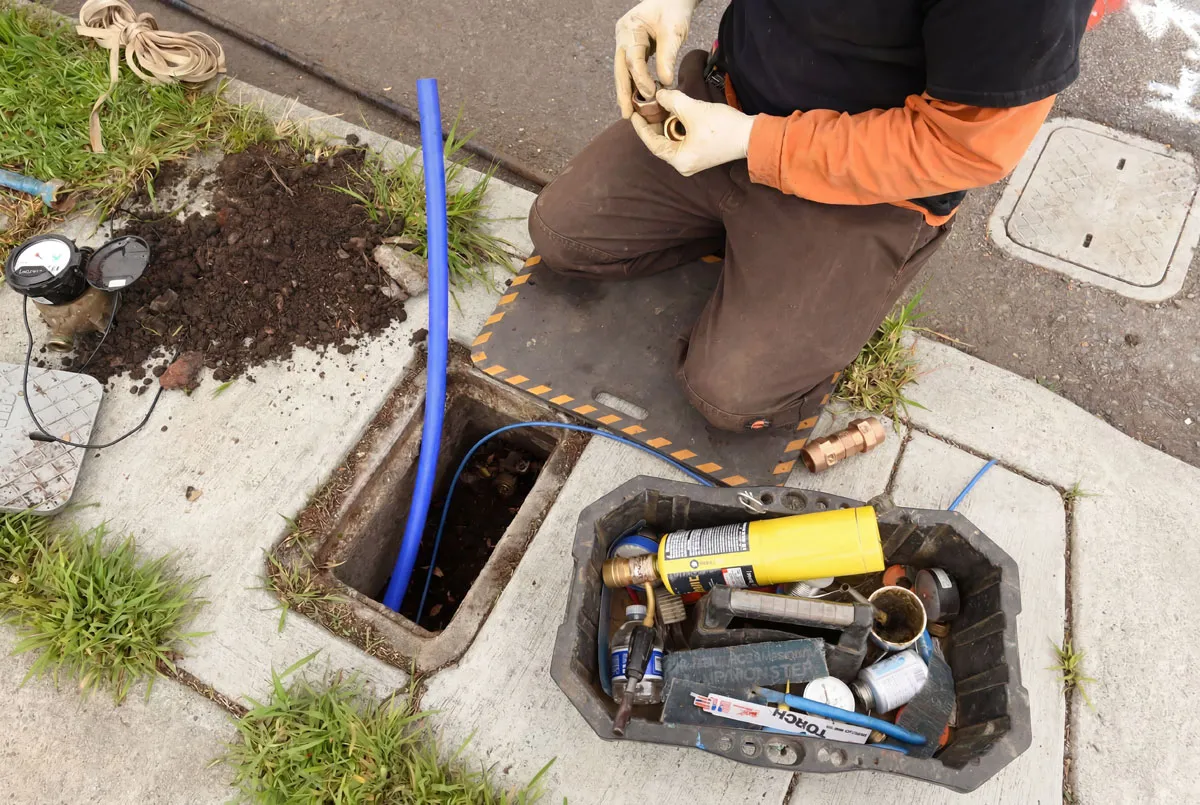
When your water main fails, you need a fast path to maintain reliable water service—without turning your property into a big dig.
Water Main Services
Horizontal Directional Drilling (HDD)
For longer runs or complex layouts, guided drilling creates a precise underground path and pulls a new line into place with minimal disruption above ground.
Pneumatic Boring
Ideal for tight spaces and straight crossings—such as beneath driveways or walkways—without open trenching.
Pipe Bursting (Replacement)
When a line must be replaced, bursting breaks the old pipe while pulling a new one through—typically via small access points, instead of a full trench.
Cured-in-Place Pipe Lining (CIPP Repairs)
Creates a new pipe within the existing line to restore integrity and extend service life—when conditions allow.
Schedule Trenchless Water Main Service Near You
Sudden high water bills, reduced pressure, wet spots, pooling water, foundation dampness or the sound of running water when nothing is on.
Pros use pressure testing, acoustic leak detection, meter-flow checks, tracer wires/locators (for some materials) and targeted potholing (hydro excavation) to confirm.
Age/corrosion, freezing, poor joints, soil movement, improper bedding, high pressure and physical damage from digging or settlement.
Cost depends on length, depth, surface restoration and method. Many national estimates are quoted per linear foot, with trenchless often costing more per foot but saving on restoration.
Repairs vary from a localized fix to a full replacement if the line is failing in multiple spots; expect major swings depending on access and surface conditions.
Often the homeowner is responsible for the portion after the meter (or after the utility’s defined demarcation point). Always confirm with your local water provider.
Standard policies often exclude wear and tear and underground service line failures. Some insurers offer service line coverage endorsements.
Typically installed deep enough to avoid damage—often below the frost line in cold climates, but depth varies by location and code.
The pipe that brings potable water from the public main to your home (often terminating at the meter and then continuing to the house).
Many residential replacements take one to two days depending on access, surface restoration needs and whether trenchless boring is used.
Often yes—trenchless methods like directional boring/HDD can install a new line with minimal surface disturbance.
Replacing a failing service line using small entry/exit pits (or HDD) instead of a long open trench—reducing disruption to landscaping/driveways.
A guided drill creates a controlled underground path; then the pipe is pulled back through the bore to the destination—useful under driveways, sidewalks, and landscaping.
Yes—trenchless boring can often run the new line beneath concrete, requiring only small access pits at the ends.
It depends on local code, soil chemistry and installation method. Many trenchless installs use flexible pipe suited for pulling through bores; a local pro should match material to conditions.
HDPE is a flexible plastic pipe commonly used for underground utilities; it’s popular for trenchless installs because it’s durable and well-suited to pulling through bores.
Yes—check for running toilets and dripping fixtures first, then check the meter when all water is off. If the meter still moves, you may have a hidden leak.
Methods include tracer wires/locators (if present), valve/meter tracing, as-built records and selective potholing to confirm depth and alignment.
Permits vary by city/utility—plumbing permits, right-of-way permits and inspections for tie-ins and backflows are common items..
It’s often worth it when you need to protect landscaping or hardscape (driveways/pavers), reduce disruption, and shorten restoration time.
Lifespan varies by material, water chemistry, soil conditions and pressure—older metals can corrode; modern plastics can last decades when installed properly.
Less common than with sewers, but roots can still exploit leaks or weak joints and worsen failures over time.
The main is the public distribution pipe (often under the street). The service line is the smaller line feeding an individual property.
You can get rapid water intrusion, soil washout, and foundation issues—shut off water at the main valve/meter (if safe) and call a licensed plumber/utility immediately.