
Protect critical underground lines—without tearing up your property. TrenchFree installs and replaces conduit using low-impact trenchless methods designed to keep driveways, landscaping, and hardscape intact.
Call for a free consultation, or a camera inspection
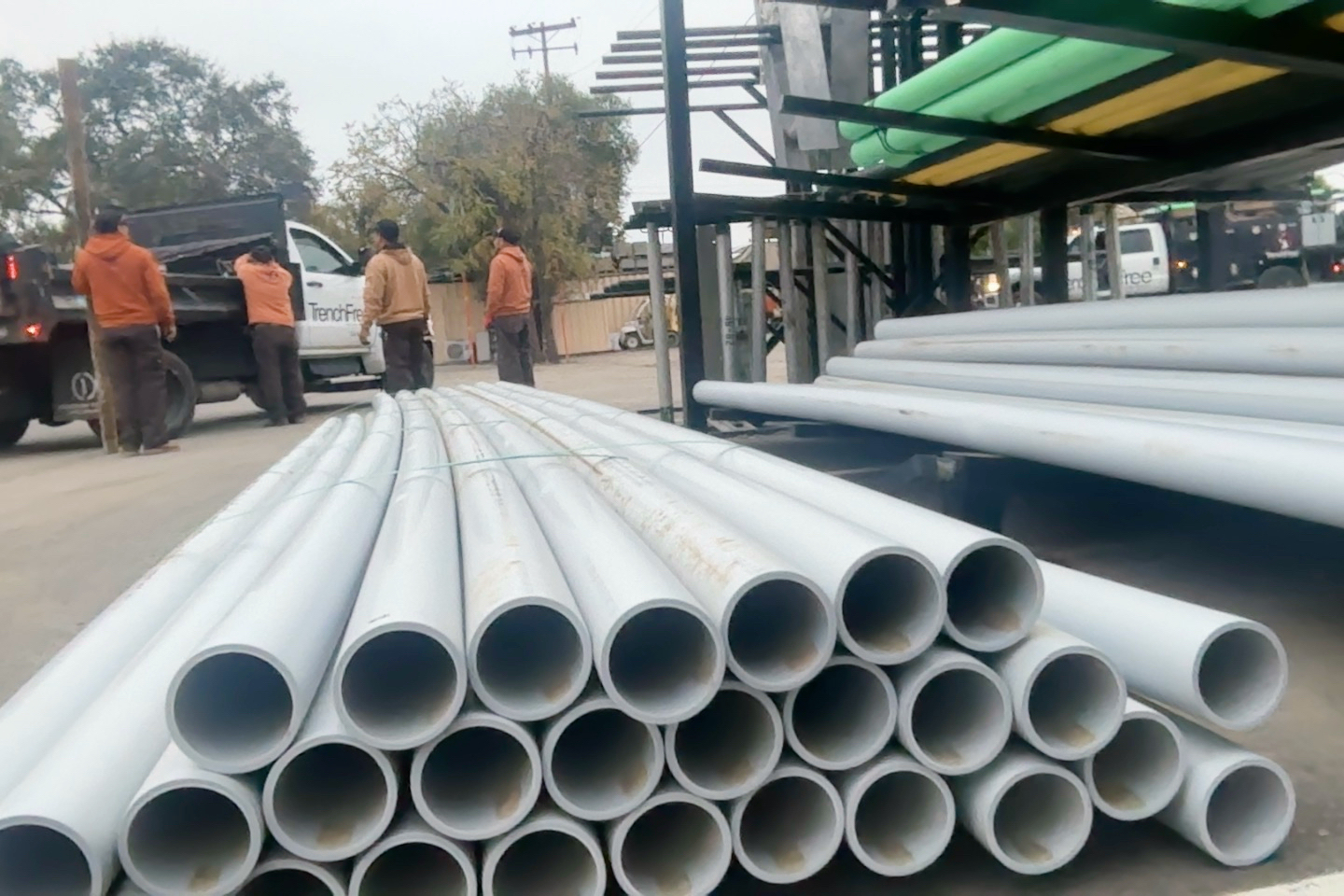
Conduit is the protective pathway for essential underground lines—electrical and communications. When conduit is damaged, undersized, or installed incorrectly, it can create avoidable hazards and expensive future repairs. We deliver a cleaner, more efficient approach using trenchless installation and replacement methods.
Common choices include PVC conduit, rigid metal conduit (RMC), or IMC, depending on code, corrosion risk, and physical protection needs.
Yes, PVC conduit is widely used for underground runs—but burial depth and installation details must meet code and local requirements.
Depth depends on wiring method, location (yard vs driveway) and protection. NEC Table 300.5 sets minimum cover requirements; many installers reference deeper cover for PVC than for rigid metal in typical residential installations.
Schedule 80 has thicker walls and is used where the conduit may be subject to physical damage (like shallow installations or exposed risers).
Sometimes, but it’s often avoided underground due to corrosion concerns unless specifically permitted and properly protected. Many underground installs favor PVC/RMC/IMC.
In some cases direct-burial cable is allowed, but depth and protection rules still apply—this is a code-driven decision and must be permitted/inspected.
Typically something with adequate cover and crush resistance for vehicle loads—often rigid metal or properly buried PVC sized and installed per code.
Use trenchless methods like boring/HDD to place conduit beneath the surface with minimal disturbance.
A guided drilling method to create a path underground and pull conduit through—ideal for crossings under concrete and landscaping.
Costs depend on length, depth, surface restoration, and whether trenching or boring is used. Directional boring is commonly priced per foot plus mobilization and site conditions.
Usually yes for electrical work—permits/inspections are common for safety and code compliance.
It depends on wire count/gauge, fill limits, and future expansion. Oversizing is common for easier pulls and future additions—but must meet code fill requirements.
Use pull points (boxes), correct sweeps, fish tape/rope and wire-pulling lubricant; long runs may require intermediate pull boxes.
You generally can’t guarantee it stays dry—condensation and groundwater happen. Use proper fittings, conduit seals/duct seal at entries, and plan for wet-rated conductors where required.
PVC conduit joints are typically solvent-cemented (glued) for strength and continuity; tape alone is not a structural joint method.
Locators may trace it if a tracer wire exists, or use specialized locating equipment; otherwise targeted potholing may be needed.
A sweep is a long-radius bend; it reduces sidewall pressure and helps prevent cable damage during pulls.
A common NEC rule is no more than 360° of total bends between pull points (e.g., four 90s max before a box/body).
Yes—often preferred for protection. Fiber has its own bend-radius and pulling-tension limits, so sweeps and proper installation practices matter.
The vertical section where conduit transitions from underground up into a panel, pedestal, or structure.
Repair usually requires exposing the damaged section and replacing it; sometimes trenchless solutions can create a new pathway if repair access is hard.
“Conduit” is commonly electrical raceway; “duct” often refers to communications/fiber pathways (sometimes in multi-duct banks). Usage varies by industry.
Often yes—directional boring can be used to avoid open trenching in difficult surfaces, though rock can raise complexity/cost.
Properly installed conduit can last decades; lifespan depends on material, soil chemistry, water exposure, and physical damage risk.
Usually yes—boring/HDD minimizes surface disruption and often preserves lawns, trees, and hardscape.
Common examples include:
For private conduit work:
Examples include:
For PG&E projects:
In most cases, yes. Electrical conduit installation commonly requires permits and inspections for safety and code compliance. PG&E projects always require permits and utility coordination.
Costs depend on:
Directional boring is typically priced per foot plus mobilization.
Conduit sizing depends on wire count, wire gauge, code fill limits, and future expansion. Oversizing is common but must remain within NEC requirements.
Long runs require proper sweeps, pull points or boxes, pulling rope or fish tape, and wire lubricant. Intermediate pull boxes may be required to stay within code limits.
Underground conduit is considered a wet environment. While water intrusion cannot be fully prevented, proper fittings, duct seal at entry points, and wet-rated conductors are used where required.
Per NEC guidelines, conduit runs are typically limited to 360 degrees of total bends between pull points.
Yes. Underground conduit is commonly used for fiber and low-voltage systems. Proper bend radius, sweeps, and pulling methods are critical.
Yes. Directional boring is specifically used to minimize surface disturbance and preserve landscaping, trees, and hardscape.
TrenchFree supports both, but pricing, access, and timelines depend on which category your project falls into